


“Music therapy at this school has made such a positive impact for our students and families that it is difficult to imagine not having it. Last year, in fact, we took the decision to increase the provision from one to two days per week!” - Special Educational Needs Coordinator, Buckinghamshire
How Music Therapy works
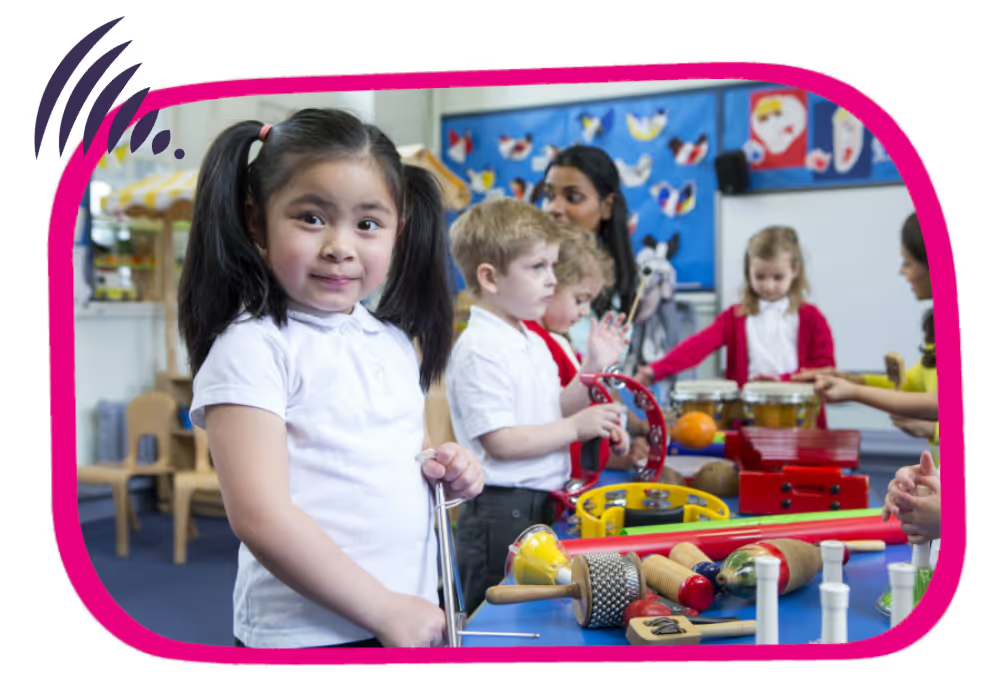
Music therapy and music sessions use rhythm, melody, and structured musical activities to support children nad young people in multiple ways:

Lifting mood and provide space for emotional expression

Encouraging social connection and relationship-building

Support communication, speech, and language

Provide cognitive stimulation and meaningful engagement
Sessions can be delivered one-to-one or in small groups depending on childrens’ needs and school settings.
Who can benefit from our services?
Music therapy can support children and young people of all ages, across both mainstream and specialist education settings.
It can be particularly helpful for those who find it difficult to express themselves through words, or who may feel overwhelmed, anxious, or disengaged in more traditional approaches. Music offers a different way in; one that is often more natural, flexible, and led by the child or young person.
We work with children and young people who may be:
- Experiencing social, emotional or mental health (SEMH) challenges
- Neurodivergent or have a diagnosis such as ASD or ADHD
- Living with learning disabilities or developmental differences
- Struggling with communication or interaction with others
- Finding it difficult to regulate emotions or behaviour
- Feeling anxious, withdrawn, or lacking in confidence
- Working towards EHCP outcomes or needing additional support in school

Our Approach
Through music therapy, children and young people can be supported to:
- Express themselves in ways that feel safe and accessible
- Build confidence and a sense of identity
- Develop communication and connection with others
- Explore and regulate their emotions
- Engage more fully in their learning and school environment
“Music therapy has been highly beneficial for our children with SEMH and ASD, providing a safe and enjoyable way to develop communication, social, emotional and motor skills. It supports emotional regulation, confidence, and engagement, helping children to thrive both in the classroom and in their wider learning environment.” – Infants School, London
Our Offer
We support children and young people with a range of needs, such as learning disabilities, mental health or social/behavioural difficulties, and including those who have not received a diagnosis. We cover visits to both home and education settings, with options available for one-to-one, group and/or community sessions:
At Home:
We offer one-to-one music therapy assessments and sessions for children and young people at home. We work alongside parents or carers and focus on the child’s wellbeing as well as developing skills that can be transferred from the session into everyday life.
In Education Settings:
We offer half day and full day services within educational settings, providing a mixture of one-to-one sessions, group music therapy or community music sessions. Our Music Therapists and community musicians tailor the activities to support emotional well-being and/or learning skills.
Specialist music therapy involvement can also be provided for:
- Addressing EHCP outcomes
- Meeting new SEND reform guidelines
- Assessing child/student’s development through a non-verbal intervention
- Assisting with wider OFSTED requirements for personalised programmes of study
Why Music Therapy Matters
Our team has a thorough understanding of medical, behavioural and person-centred approaches. This means we can adapt our approach to each child, whether they need structure, creativity, emotional support, or space to explore.
By involving staff and families, improvements can be sustained, helping residents enjoy a fuller, more connected daily life.
“Emotionally, the music therapy gives children a safe way to express feelings they may not yet have the words for. I've noticed children release their frustration through music and sounds, explore joy and begin to recognise and regulate their emotions.Socially, music therapy supports connection through turn taking, sharing attention, which can strengthen relationships with peers and adults and builds a sense of belonging.Physically, music therapy helps our children with fine motor skills, balance and coordination and control when playing music.” – Specialist SEND School, Bedfordshire
Funding Options
We know that schools are facing funding challenges, and we aim to be as flexible as possible. Most of the schools we work with commission us to come in for a half or full day service once per week. This enables the Music Therapist to deliver a mix of individual and group sessions, allowing them to support a range of children across the school.
Schools usually use a variety of funding streams to help provide music therapy as an intervention for their students, including Pupil Premium. Some students might also have music therapy specified on their EHCP.

Ready to make a referral or discuss a service?
Please get in touch using the enquiry team and a member of our Referrals Team will be in touch shortly.
Discover how we are working with schools

Frequently asked questions
The questions we're asked most often, answered. Anything else, get in touch and we'll talk it through.
Our pricing depends on the setting, the length of the provision and the number of people taking part, so we quote for each service individually rather than working from a fixed price list. For care homes, schools and other organisations we offer half-day and full-day provisions which can be tailored to your residents' or service users' needs, covering anything from individual to group sessions.
Get in touch to speak to a member of our services team and we will talk through what this might look like for you.
It is always good to hear from schools exploring new ways to support their pupils' wellbeing and development. We offer both half-day and full-day school-based provisions, tailored to your pupils' needs, from individual and group therapy sessions through to wider staff or parent support.
Costs depend on the size and shape of the provision, so there is no single price. Have a look at our Education services page, then get in touch to arrange a chat with our services team.
You can make a referral through our online referral form. It asks for the basics we need to get started: who the referral is for, their contact details, a little about their needs and what you are hoping music therapy will help with, and how the sessions would be funded.
You do not need to have every answer ready. If anything is unclear, get in touch and a member of our team will talk it through with you.
Learn More
For more information about who and where we work and our team, please click on the links below